
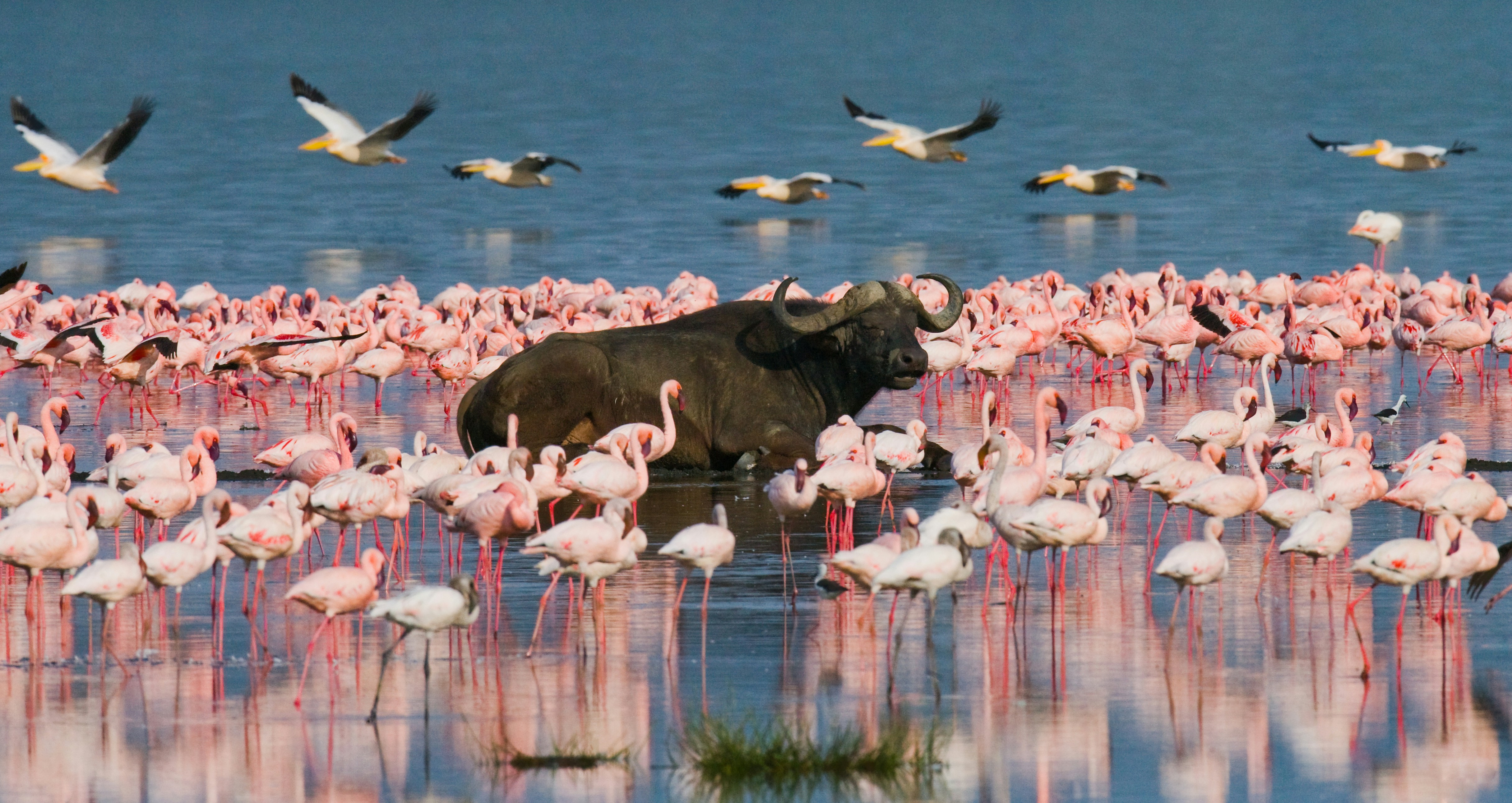
Lake Nakuru National Park is one of Kenya's most celebrated wildlife sanctuaries — a compact, wildlife-rich reserve wrapped around the soda lake that once turned pink with the world's largest flamingo gathering. Today the park is renowned for its black and white rhino populations, large herds of buffalo, leopard, lion, and an extraordinary diversity of birdlife that makes it a paradise for birders and general wildlife enthusiasts alike.
Situated 160 kilometres northwest of Nairobi in the Great Rift Valley, Lake Nakuru is a natural addition to any Kenya safari itinerary. Its manageable size means you can cover the park thoroughly in a day or two — but many visitors, once they've experienced the dawn light over the lake or watched a leopard drag its kill into a fever tree, find themselves wishing they'd booked longer.
Wildlife at Lake Nakuru National Park
Lake Nakuru is one of the Rift Valley's great soda lakes and was once home to over a million lesser flamingos — a pink tide that stretched from shore to shore and drew visitors from across the world. Water level fluctuations have made the flamingo numbers less predictable in recent years, with the birds moving between Nakuru, Lake Bogoria, and Lake Elementaita depending on conditions. When the flamingos are present in large numbers, the spectacle is genuinely breathtaking — a shimmering pink ribbon lining the lake edge at dawn.
Beyond the flamingos, Nakuru's shores attract pelicans, African fish eagles, kingfishers, cormorants, yellow-billed storks, and over 450 recorded bird species, making it a world-class birding destination regardless of whether the flamingos are present.
Lake Nakuru is one of Kenya's most important rhino sanctuaries. The park is fully fenced and hosts both southern white rhinos and the critically endangered eastern black rhinos — making it one of the very few places in East Africa where you can see both species on a single game drive. The white rhinos in particular are highly accessible, often grazing in open grassland in clear view of safari vehicles.
Rhino conservation has been a central focus at Nakuru for decades. Today the park is among the most reliable places in Kenya to tick rhinos off your Big Five list, with sightings on the vast majority of game drives.
Nakuru's leopards are among the most photographed in Kenya. The park's yellow fever tree forests provide perfect cover, and it's common to spot a leopard draped over an acacia branch or carrying prey at dawn and dusk. The park's lions are frequently seen on the Lanet Ridge and along the lake edge — look out for the large prides that are well-known to the guides.
Other predators include spotted hyena, serval, caracal, and African wild cat. The park's diverse habitat — from open grassland to dense forest and rocky escarpment — supports a remarkable concentration of carnivores for its relatively small size (188 km²).
Cape buffalo are present in large herds throughout the park, particularly along the lake edge and in the woodland clearings. Rothschild's giraffe — one of Africa's most endangered giraffe subspecies — were introduced to Nakuru as part of a conservation programme and are now a regular sight. Zebra, waterbuck, reedbuck, impala, and warthog fill the open grasslands, providing prey for the park's predators and spectacular backdrops for photography.
The park also hosts hippos in the shallower sections of the lake and olive baboons in the woodland margins — always entertaining subjects for safari photography.
Best Time to Visit Lake Nakuru
Lake Nakuru — Month by Month
Lake Nakuru can be visited year-round, but dry season delivers the best overall experience:
- July – September: Peak dry season. Sparse vegetation makes wildlife easy to spot. Roads are in their best condition. This is the most popular period — combined with a Maasai Mara migration safari, it makes for a perfect Kenya itinerary.
- January – February: Short dry season. Excellent visibility, fewer visitors than peak. Flamingos are often present in higher numbers as the lake reaches optimal water levels.
- June: Transitional month — vegetation starting to dry, wildlife viewings improving. Good for those who want to avoid peak season crowds.
- April – May (Long Rains): Tracks can become waterlogged. Wildlife is harder to spot in dense vegetation. However, the park is lush, birdlife is at its most active, and rates are discounted significantly.
Flamingo numbers at Lake Nakuru have become unpredictable due to rising water levels. For guaranteed flamingo spectacles in Kenya, Lake Bogoria (2 hours north) currently hosts the largest concentrations and makes a great day trip or overnight extension from Nakuru.
Lake Nakuru Park Fees & Practical Information
| Category | Fee (2026) |
|---|---|
| Non-resident adult (24-hour entry) | USD $60 |
| Non-resident child under 12 | USD $35 |
| East African citizen adult | KES 600 |
| Vehicle entry (non-commercial) | USD $25 |
| Camping (public site) | USD $30 per person |
Kenya Wildlife Service uses a cashless Mpesa/smart card system at all national park gates. Cash is not accepted. Your Tazama driver-guide handles all entry payments on your behalf when you book a safari package with us.
Getting to Lake Nakuru
Lake Nakuru National Park is easy to reach from Nairobi and pairs perfectly with other Rift Valley destinations:
- By road from Nairobi: 2.5 – 3 hours via the A104 highway (Nakuru town, then 5km to the main gate)
- From Naivasha: 60km / about 1 hour — ideal for combining Nakuru with Hell's Gate or Crescent Island
- From Maasai Mara: 4–5 hours via Narok — Nakuru works perfectly as a stop-off on the return journey to Nairobi
- By air: Nakuru airstrip is served by small charter aircraft; most visitors drive due to the short road distance from Nairobi
Where to Stay Near Lake Nakuru
Accommodation around Lake Nakuru ranges from budget campsites inside the park to luxury lodges overlooking the lake:
- Sarova Lion Hill Game Lodge — elevated position with panoramic lake views, reliable year-round
- Lake Nakuru Lodge — inside the park, close to wildlife action, mid-range
- Flamingo Hill Tented Camp — boutique tented camp near the main gate
- ARC The Hotel (Nakuru town) — comfortable city-based option with park transfers
- KWS Campsite — budget camping inside the park with basic facilities
Lake Nakuru in a Kenya Safari Itinerary
Lake Nakuru works beautifully as part of a multi-destination Kenya safari. Popular combinations include:
- Nairobi → Nakuru → Maasai Mara: The classic Kenya loop — add Naivasha for a boat ride on the hippo-filled lake
- Nairobi → Amboseli → Nakuru → Nairobi: A wildlife-rich 5-day circuit combining elephants and Kilimanjaro views with rhinos and flamingos
- Rift Valley Lakes Route: Nakuru + Bogoria + Baringo — a spectacular birding and wildlife circuit through Kenya's Great Rift Valley
Lake Naivasha is just 60km from Nakuru and offers boat safaris among hippos, island walks with zebra and giraffe at Crescent Island, and the dramatic scenery of Hell's Gate National Park. The two lakes together make a superb 2-night Rift Valley extension for any Kenya safari.
Plan Your Lake Nakuru Safari with Tazama
Tazama Africa Holidays designs Kenya safaris that make the most of every destination — including Lake Nakuru National Park. Whether you want to tick the Big Five, photograph flamingos and pelicans at dawn, or track rhinos across the open grassland, our expert driver-guides know Nakuru intimately and time game drives for the best wildlife encounters.
We'll build a Kenya itinerary that fits your timeline and budget — from a day visit en route to Naivasha to a dedicated 2-night Nakuru wildlife experience. Contact us today for a free, tailored Kenya safari quote.